
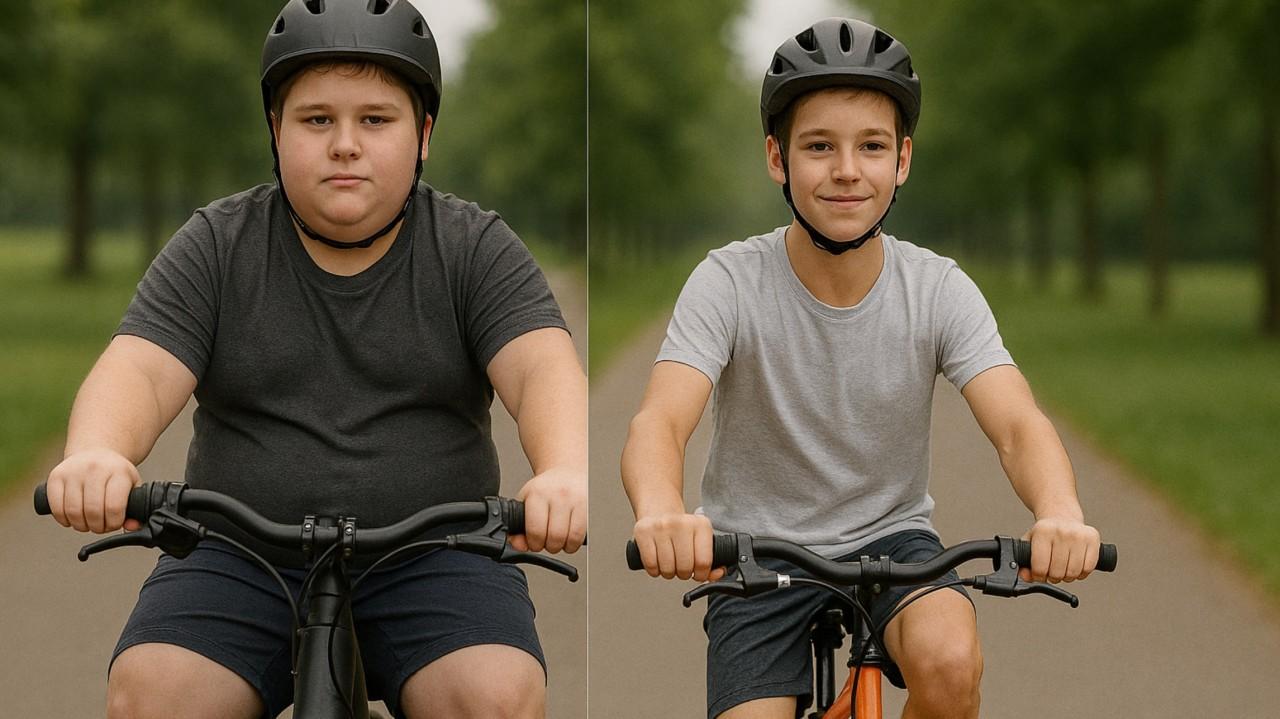
I had one of those moments this week that left me wondering.
At my gym in an affluent neighborhood, I watched a parade of kids arriving on electric scooters and e-bikes. Thumbs on throttles, bodies still, just… gliding.
Meanwhile, across town in a less privileged area, I saw something different: kids walking in groups, riding regular bikes, playing pickup basketball, their energy spilling onto every sidewalk and court.
The irony hit me hard: wealth doesn’t necessarily breed health.
We work hard to give our children advantages like better schools, safer neighborhoods, the latest gear. But somewhere in that equation, we’ve accidentally engineered movement out of their daily lives. We’ve optimized convenience at the cost of something fundamental to human wellbeing.
Those kids on electric scooters aren’t just missing a bike ride. They’re missing the accumulated micro-moments of physical activity that used to be woven into childhood. Walking to a friend’s house. Pedaling uphill. Running to catch up. These weren’t exercise—they were just life.
But this isn’t just about kids. We adults have done the same thing. We circle parking lots for the closest spot. We take elevators up one floor. We Door Dash instead of walking three blocks. Each convenience is small, seemingly harmless. But they add up to bodies that barely move.
Whether you’re 8 or 80, I keep coming back to three essential practices that ground us in health and wellbeing:
Movement – Not necessarily exercise, but motion as a natural part of living. Our bodies were designed to move, and when we don’t, everything suffers—our physical health, our mental clarity, even our mood.
Meditation – Time for stillness, reflection, and presence. This doesn’t have to mean sitting cross-legged for an hour. It’s about creating space to think, to process, to simply be without constant stimulation.
Moderation – The wisdom to know that more isn’t always better. More convenience, more comfort, more optimization—sometimes these subtract from our lives rather than add to them.
If this resonates with you, here are some practical ways to reclaim movement and balance:
For yourself:
- Choose the farther parking spot intentionally
- Take phone calls while walking
- Use stairs as an opportunity, not an inconvenience
- Walk or bike for errands within a mile
- Stand during one meeting per day
For your kids:
- Let them walk or ride (human-powered) to nearby destinations
- Create “device-free zones” in time and space
- Encourage active play over passive entertainment
- Model the behavior. They’re always watching
- Make movement social: walk together, play together, explore together
For your mindset:
- Reframe inconvenience as opportunity
- Track your daily movement (even just steps) to build awareness
- Schedule stillness the same way you schedule meetings
- Ask regularly: “Is this convenience helping or hurting me?”
Growing up on a farm in Texas, I learned that hard work and physical effort weren’t obstacles to overcome, they were part of what made life meaningful. We didn’t have the option to outsource every bit of effort, and looking back, that was a gift.
The real advantage we can give our children isn’t a life free from effort. It’s a life where they understand their own strength, resilience, and capability. These qualities that only develop through use.
Wealth can buy convenience, but it can’t buy health. That requires something money can’t purchase: the daily choice to move, to pause, to practice moderation in a world designed for excess.
So this week, I’m challenging myself and you: Find one place where you’ve traded movement for convenience, and trade back. Take the stairs. Walk instead of drive. Put down the phone and play.
Your body—and your life—will thank you.
Copyright © 2025. All rights reserved. | Privacy Policy | Terms of Service